

LOKĀNSHCookies
We use essential cookies to run this site. If you accept, we also use analytics and advertising cookies, from Google among others, to understand visits and show our pieces to people who may like them.
LOKĀNSHCookies
We use essential cookies to run this site. If you accept, we also use analytics and advertising cookies, from Google among others, to understand visits and show our pieces to people who may like them.

Living Colour
A root. A flower. A bark. A leaf meeting light for the last time. Nature has always known how to make colour. We simply learned to ask.
At LOKĀNSH, colour is a journey from soil to soul grown with intention, tended with knowledge, worn with meaning. This is what colour from the ground feels like.

01
The oldest blue in the world. Still unfinished.
Not the chemist.
Not the artisan.
Not us.
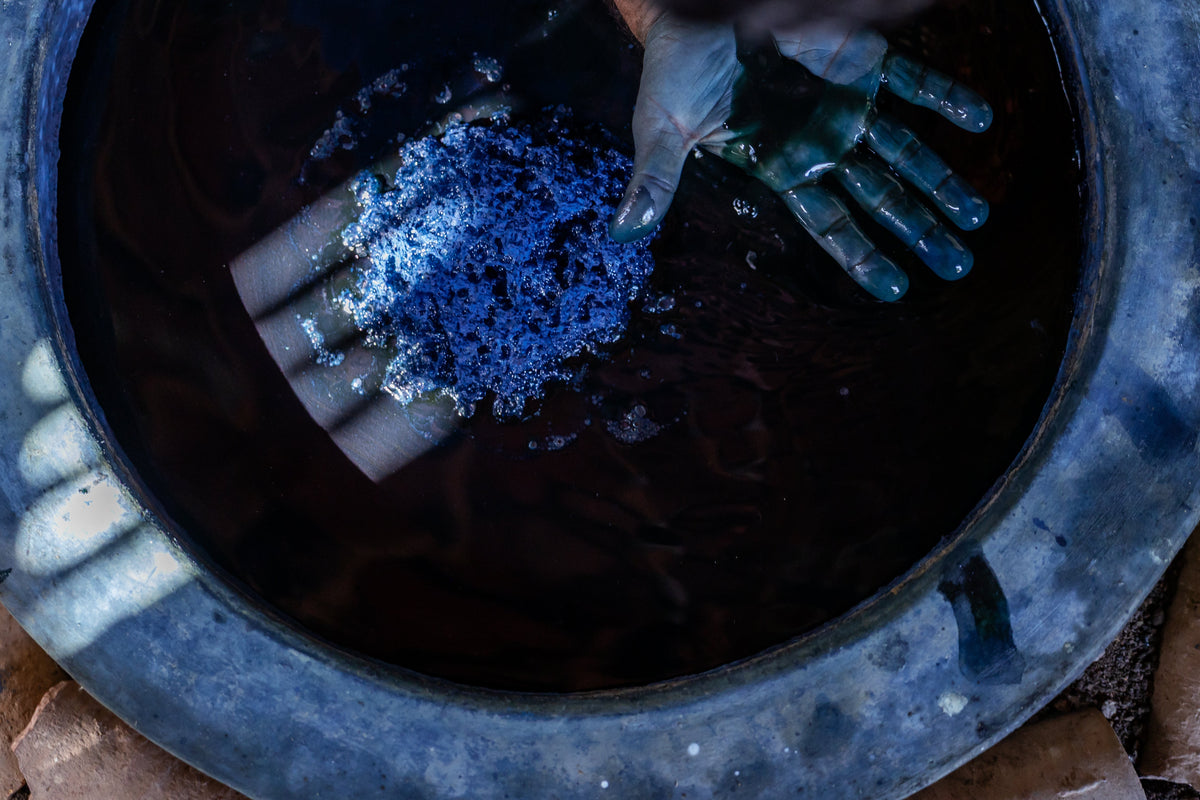
02 — The Science
After finishing my studies, I started asking why one of the oldest human crafts leaves such a deep wound on the world. That question led me here to indigo. To chemistry books. To reduction potentials and vat pH and the precise conditions under which colour bonds to fibre.
I understood it. On paper.
Then I built a vat on my terrace in Ichalkaranji. Then another. From 2021 to 2024, I learned the difference between knowing something and doing it. The vat has its own logic temperature, bacteria, alkalinity, time. You can read every paper written about it and still stand in front of a dead vat with no explanation that fully holds.
The science is real.
It is also not enough.
03 — The Other Knowledge
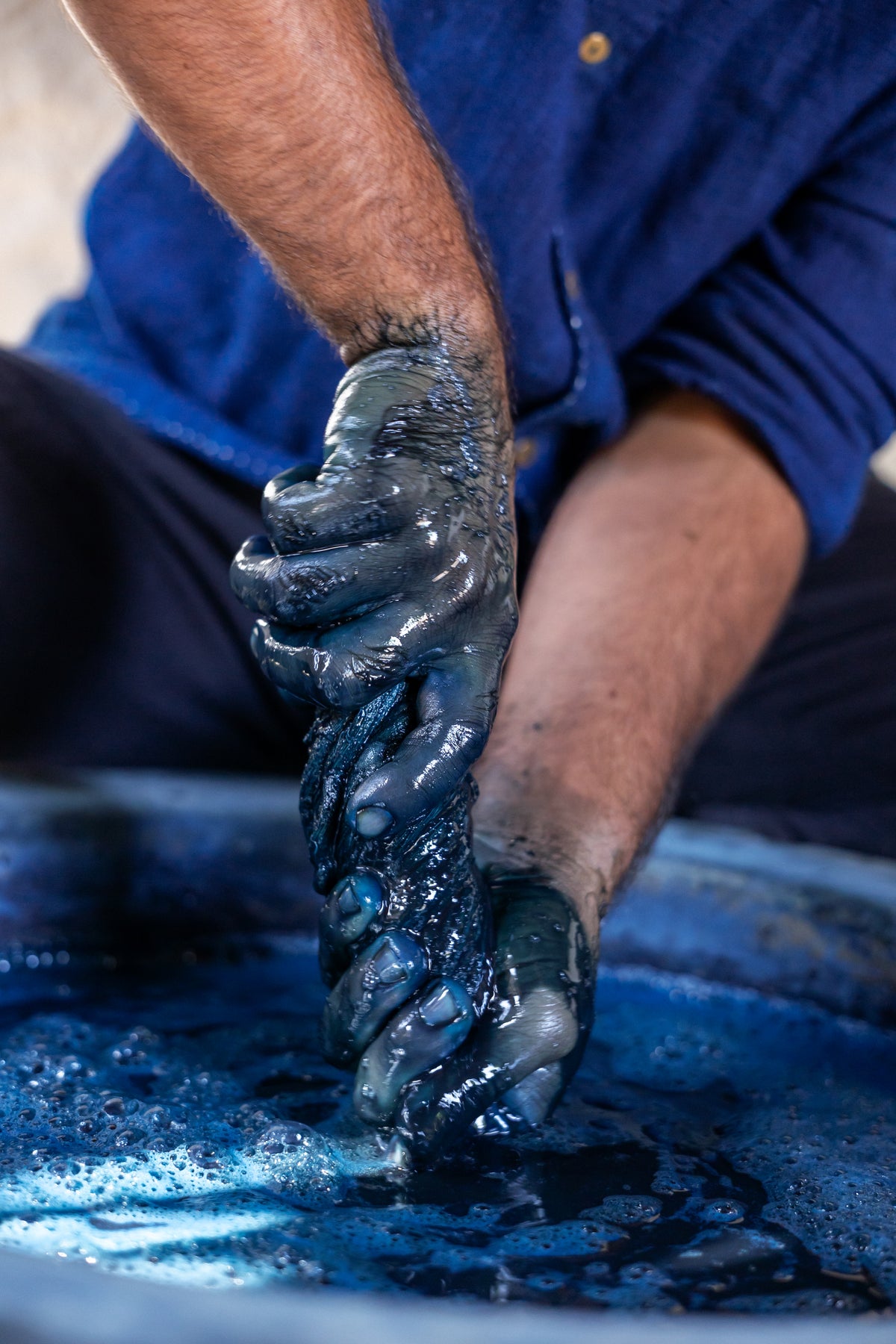
He has been doing this longer than I have been asking questions. His knowledge lives in the hands, not on the page. He cannot always tell you why something works. It works because it works because he has seen it work ten thousand times and his body knows things his words don't.
I had to decide whether to trust that. I did. He was right more often.
Two kinds of knowledge.
Neither one complete.
Both necessary.
04 — What Indigo Taught Both
You create the conditions. You tend the vat feeding it, keeping it warm, checking it daily the way you would check on something living, because it is. You do everything the books say. Everything the artisan says.
And sometimes the blue arrives, deep and true, and you don't fully know why it worked this time and not last time.
Indigo has been doing this for thousands of years.
It has never fully belonged to any of them. It doesn't fully belong to us either.
We are not the ones who cracked it. We are the ones who kept showing up.
05 — The Cloth
It carried everything into the vat the fibre grown in soil, the hands that wove it, the water drawn from a specific place, a living vat fed and tended over months.
The colour it carries is the result of everything we understood and everything we didn't. The chemistry that worked and the chemistry that surprised us. The artisan's knowledge and the knowledge that lives beyond both of us.
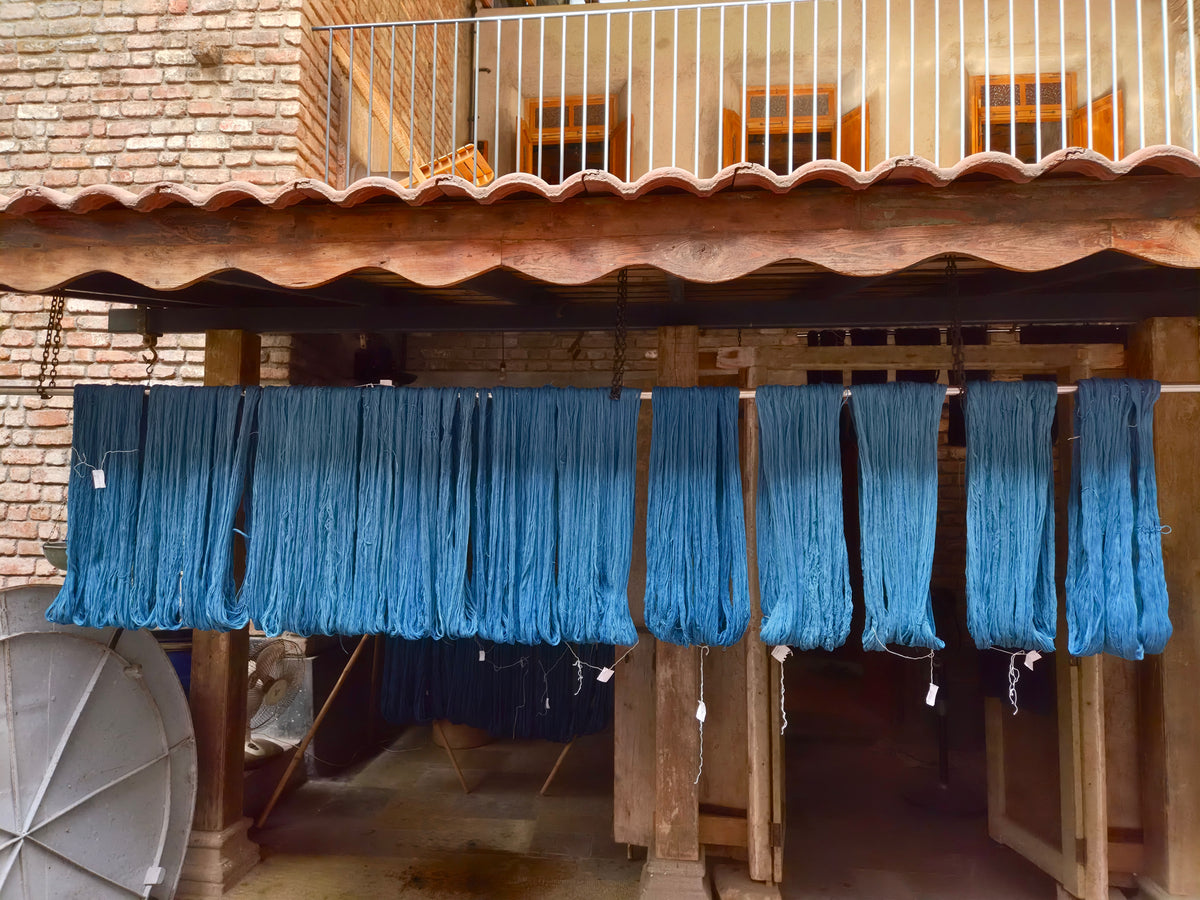
It will fade. Slowly.
The colour sits on the surface of the fibre not forced deep inside like a synthetic dye, but resting on it, moving with light and water and skin and years.
What looks like fading is the cloth continuing the conversation. Finding, slowly, the blue that belongs to you.
Same hands every time. Never the same blue twice.
06 — A Palette Rooted in Nature
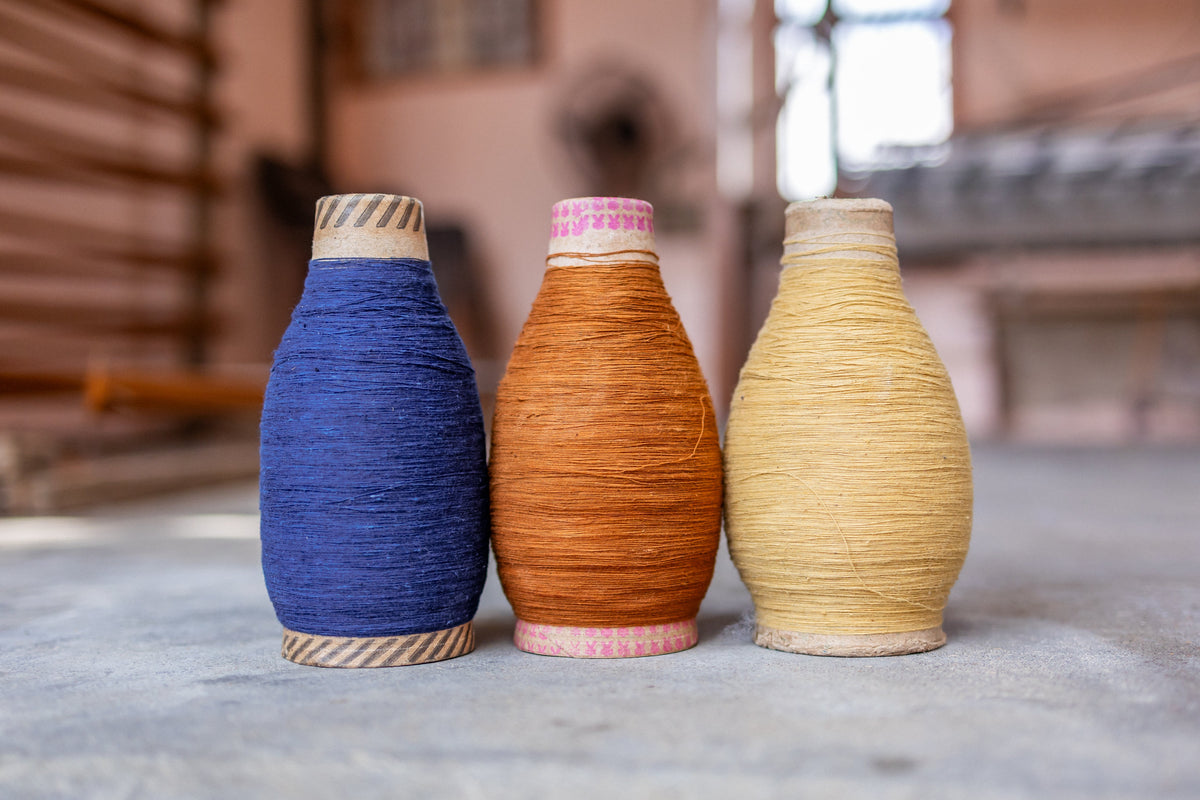
They are chosen because they come from the same world as the fabric they touch. Grown in soil. Shaped by season. Honest in the way only grounded things can be.
Every dye behaves differently. Cotton holds colour differently than silk. Humidity shifts a tone. Light evolves it. Water remembers everything.
At LOKĀNSH we work with this knowledge not against it. Choosing each colour for the material it will meet, the climate it will live in, the hands it will pass through.
Colour made with knowledge. From the first decision to the last wear.